The Missing Foundation of Enterprise AI Transformation: Living Process Documentation

James Christie
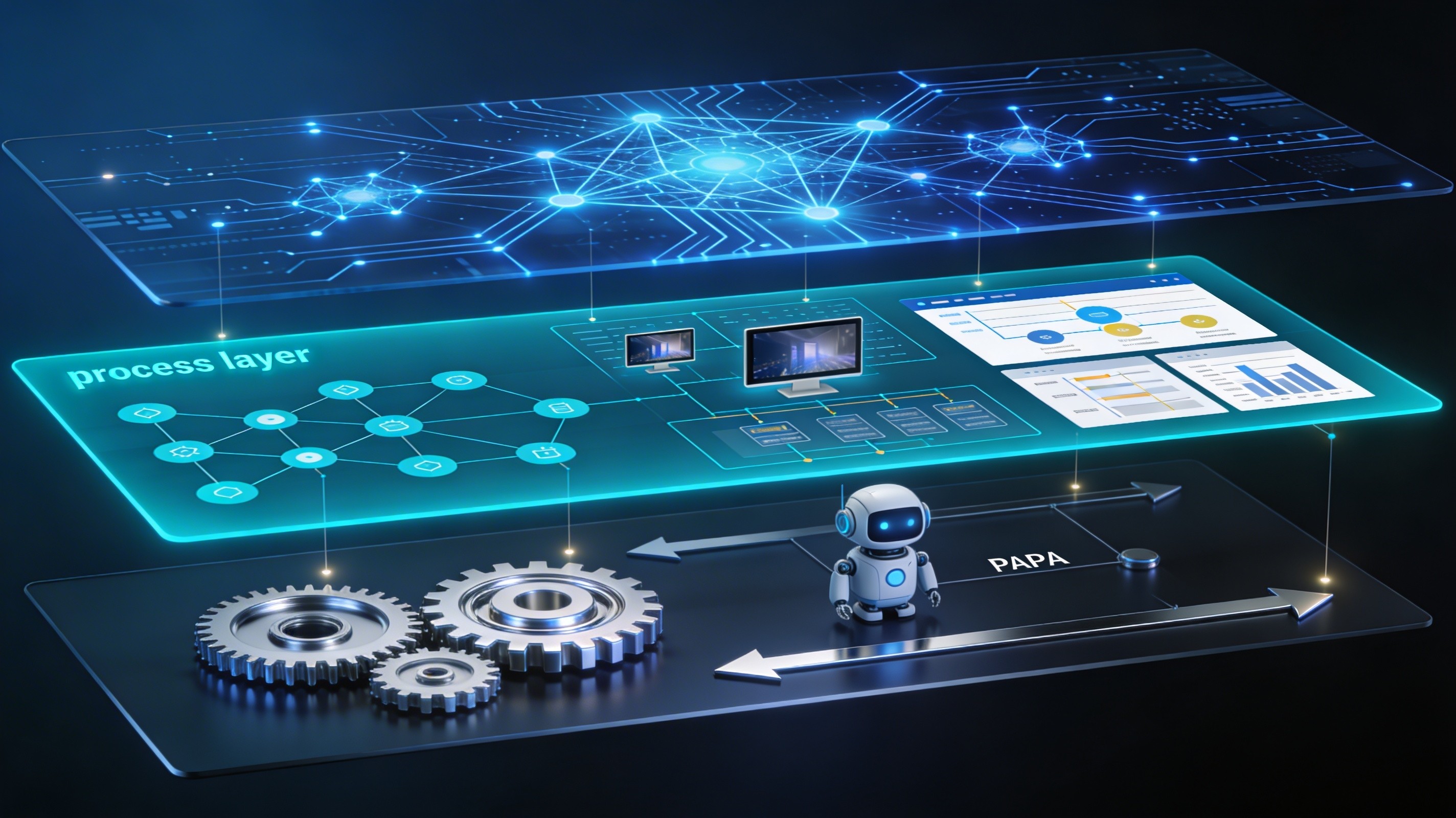
Enterprises are pouring billions into AI and hyperautomation, with the global hyperautomation market projected to grow from USD 15–18 billion mid-decade to over USD 38 billion by 2030 at nearly 20% CAGR, and digital process automation hitting USD 30 billion by 2031. Yet most transformation programs stall on a surprisingly old problem: nobody has a current, trusted view of how work actually gets done across systems, teams, and regions.
Why AI Transformation Stalls at the Process Layer
Executives fund AI, automation, and new platforms assuming teams can quickly turn strategy into executable workflows. On the ground, delivery teams spend weeks combing through workshops, meetings, and screen recordings just to write basic SOPs and PDDs.
Documentation is created late (or never), so it lags well behind how people actually work.
Each function invents its own templates and repositories, making it impossible to get a unified operational picture.
When key analysts leave, critical context walks out the door with them, increasing risk for audits, incidents, and change programs.
Recent hyperautomation and RPA trend reports highlight a shift from isolated bot scripts to end-to-end business process automation and orchestration at the process layer. This only works when organizations have a clear, accurate understanding of how work actually flows today—otherwise automation just accelerates broken processes.
Why Traditional Documentation Can’t Scale to Enterprise AI
Most enterprises still rely on a mix of screen-capture tools, BPM suites, and generic transcription products to describe how work happens. Each tool solves a narrow problem—but none create a single, living source of truth for processes.
Screen-capture SOP tools document what’s on screen, but miss business rules, exceptions, and decisions discussed in meetings.
BPM tools model ideal-state diagrams, but require specialist time and rarely reflect the messy reality of daily operations.
Transcription tools convert speech to text, but don’t understand the user interface, system changes, or flow structure.
For AI and automation teams, this means every project starts with a manual “translation” exercise—from meetings and videos into PDDs, SOPs, and process maps—before any real build can begin.
Defining a New Layer: Living Process Documentation
To unlock AI at scale, enterprises need a living layer of process documentation that sits between day-to-day work and automation platforms. Multiple analyses of enterprise AI rollouts based on McKinsey’s research show a widening gap between AI adoption and real business impact, driven less by model performance and more by missing foundations in processes, integration, and governance.
In practice, this means a system that can:
Ingest meetings, trainings, and walkthrough videos from tools like Zoom, Teams, Loom, and internal recordings.
Watch both the shared screen and listen to the conversation, detecting steps, decisions, branches, and roles.
Generate delivery-ready SOPs, process maps, and PDD-style documents aligned to your own templates and standards.
Instead of static documents, enterprises get a living “work graph”: a searchable, versioned library of processes that evolves every time a new recording is captured.
From Documentation to Execution: The Bridge to Automation and AI
Once process knowledge is captured in a structured, consistent format, it becomes a direct input to automation and AI initiatives. Leading automation frameworks consistently recommend mapping and simplifying processes before automating, because unclear workflows lead to brittle, high-maintenance automations.
A typical flow:
A workshop or training session is recorded as usual—no change to how teams run meetings.
AI ingests the recording, identifies every step and decision, and outputs SOPs plus process maps.
Analysts review and adjust in a shared workspace instead of building documents from scratch.
Automation teams consume these artifacts as blueprints for RPA bots, workflow engines, or AI agents.
This closes the gap between “what we discussed in the room” and “what actually gets automated,” while preserving context for future audits and continuous improvement.
What “Good” Looks Like for Enterprise-Grade Process Documentation
For enterprises evaluating their process documentation stack in the age of AI, a modern platform should meet a clear set of criteria. Market overviews stress that modern process/automation stacks must integrate with ERP/CRM and other systems rather than operate as isolated tools, emphasizing orchestration and interoperability across technologies.
At a minimum, it must:
Generate SOPs and process maps in minutes—not weeks—directly from video and meetings.
Combine screenshots, text instructions, and flow diagrams so teams see both the narrative and the visual path.
Support collaborative editing, permissions, and versioning, so global teams can align without copy-paste chaos.
Make documentation fully searchable and “RAG-ready,” so AI assistants can answer operational questions safely and accurately.
Integrate cleanly with ERP, CRM, and workflow tools to avoid yet another silo and reduce the integration risk that derails many AI and automation initiatives.
Enable governance features like ownership, versioning, and review cadences so that process documentation can underpin compliant, auditable automation at scale.
When this foundation is in place, AI transformation stops being a slideware promise and becomes an execution capability: every critical process has a living, machine-readable description that teams can trust.